
Clearances in piston rings

Four important clearances taken in the piston rings are:
  • Axial Clearance
  • Radial Clearance
  • Butt Clearance
  • Controlled Pressure Relief groove measurement

Axial Clearance: 

It is the clearance between the ring and the groove to be measured at the top part by a feeler gauge. This clearance is to be measured at four different points for each ring.

Radial Clearance: 

The radial clearance is the difference between the groove depth and ring width, which can be measured by a vernier caliper

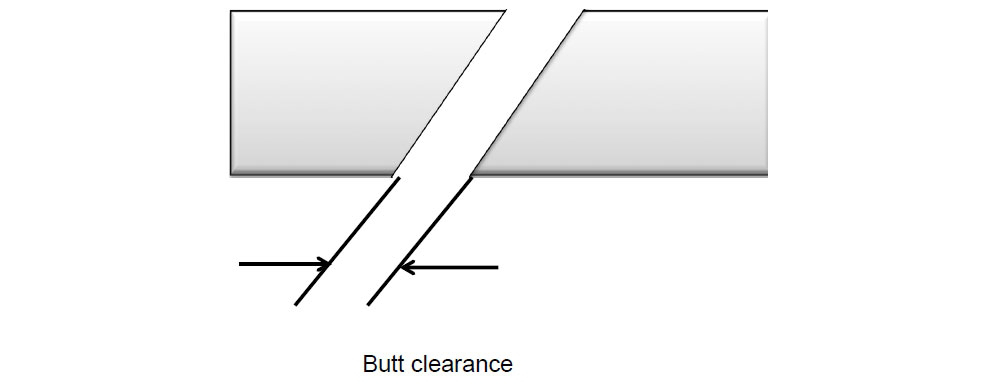
Butt clearance:

 It is the clearance between the end butt of the ring inside the liner.
The ring is placed inside the liner and the impression can be taken on a paper by applying Prussian blue paste at the butt ends. The gap between the impressions can then be measured.
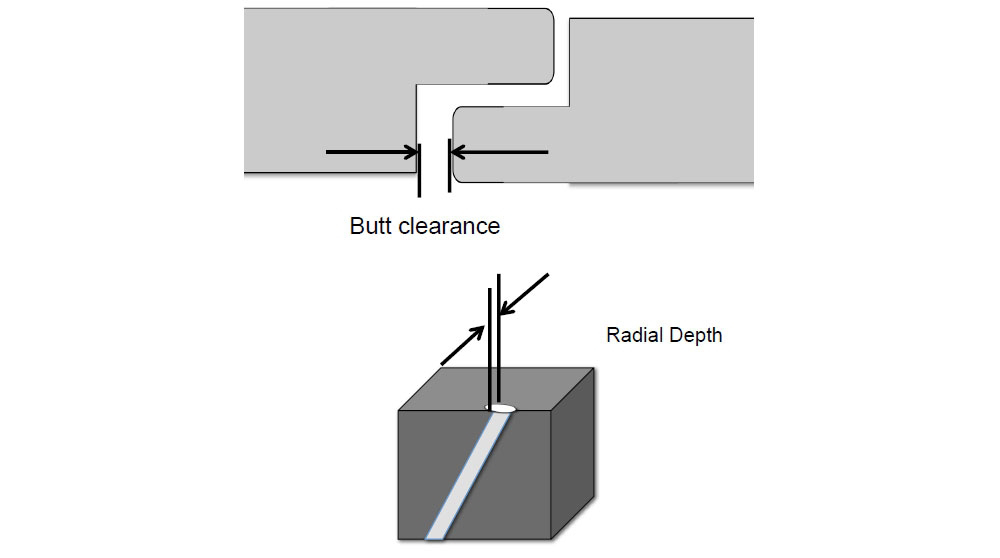
CPR ring: 

The controlled pressure relief ring is fitted in the MAN piston as a top ring. The CPR ring has “S” shaped butt joint with six controlled pressure relief grooves milled across the face. Measure the radial depth of the grooves butt clearance at the S joint.

Comments


  1. Hey what a brilliant post I have come across and believe me I have been searching out for this similar kind of post for past a week and hardly came across this. Thank you very much and will look for more postings from you Best diamond huggie hoops Services Provider

    ReplyDelete
  2. Thanks for sharing the best information and suggestions, it is very nice and very useful to us. I appreciate the work that you have shared in this post. Keep sharing these types of articles here.Celeste Satin Suit Blazer Online

    ReplyDelete
  3. This post is really awesome. Genuinely i like this blog. It gives me more useful information. I hope you share lots of things with us .taparia tools distributors in bangalore

    ReplyDelete

Post a Comment

If you have any doubts.Please let me know

Popular posts from this blog

Main engine interlocks

Interlocks are provided so that the engine can be started or reversed only when certain conditions have been fulfilled. When there is a remote control of engines, it is essential to have interlocks. This reduces the possibility of engine damage and any hazards to the operating personnel. Turning gear Interlock . This device prevents the engine from being started if the Turning gear is engaged. Running Direction Interlock . This prevents the fuel from being supplied if the running direction of the engine does not match the Telegraph. Starting Air Distributor in end position . This prevents starting from taking place if the shifting of the Distributor has not been completed. Main Lube. oil pressure, Piston cooling pressure, Jacket water pressure, and important parameters must be above the required minimum. Auxiliary Blower Interlock . The Auxiliary Blower is provided in case of Constant pressure turbo charging. Air Spring pressure Interlock . In case of the present generation...

Differences between MC/MC-C and ME/ME-C engines

The electrohydraulic control mechanisms of the ME engine replace the following components of the conventional MC engine: Chain drive for camshaft Camshaft with fuel cams, exhaust cams and indicator cams Fuel pump actuating gear, including roller guides and reversing mechanism Conventional fuel pressure booster and VIT system Exhaust valve actuating gear and roller guides Engine driven starting air distributor Electronic governor with actuator Regulating shaft Engine side control console Mechanical cylinder lubricators. The Engine Control System of the ME engine comprises: Control units Hydraulic power supply unit Hydraulic cylinder units, including: Electronically controlled fuel injection, and Electronically controlled exhaust valve activation Electronically controlled starting air valves Electronically controlled auxiliary blowers Integrated electronic governor functions Tacho system Electronically controlled Alpha lubricators

Manganese bronze is not typically used as a propeller material .Why

1. High cost: Manganese bronze is a costly alloy, making it less economical for large propellers. 2. Low strength-to-weight ratio: Compared to other propeller materials like nickel-aluminum bronze or stainless steel, manganese bronze has a lower strength-to-weight ratio. 3. Susceptible to corrosion: Manganese bronze can corrode in seawater, especially when exposed to high velocities and turbulence. 4. Poor cavitation resistance: Manganese bronze is more prone to cavitation damage than other materials. 5. Difficult to cast and machine: Manganese bronze is challenging to cast and machine, making it less desirable for complex propeller geometries. 6. Limited weldability: Manganese bronze has poor weldability, making repairs and modifications difficult. Nickel-aluminum bronze or stainless steel are commonly used for propellers due to their: - High strength and durability - Excellent corrosion resistance - Good cavitation resistance - Ease of casting and machining - Weldability