
HRU(Hydrostatic Release Unit )

A hydrostatic release unit allows a liferaft to launch automatically if there isn’t time for crew to launch it manually. 
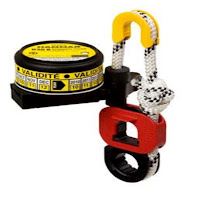
How it works:
  • The strong white rope is secured to the deck or liferaft cradle and attached to the liferaft lashing with a sliphook. 
  • If the ship sinks, the water pressure will (within 4 metres) activate the sharp knife which  cuts the white rope and the liferaft will float free. 
  • As the ship sinks, theliferaft painter line will be stretched and the liferaft starts to inflate.  
  • The Red Weak Link breaks and survivors can board the floating liferaft.

• Breaking strength of white rope sling: min 15kN.
• Breaking strength of red weak link: 2.2 +/- 0.4 kN

Comments

Popular posts from this blog

Manganese bronze is not typically used as a propeller material .Why

1. High cost: Manganese bronze is a costly alloy, making it less economical for large propellers. 2. Low strength-to-weight ratio: Compared to other propeller materials like nickel-aluminum bronze or stainless steel, manganese bronze has a lower strength-to-weight ratio. 3. Susceptible to corrosion: Manganese bronze can corrode in seawater, especially when exposed to high velocities and turbulence. 4. Poor cavitation resistance: Manganese bronze is more prone to cavitation damage than other materials. 5. Difficult to cast and machine: Manganese bronze is challenging to cast and machine, making it less desirable for complex propeller geometries. 6. Limited weldability: Manganese bronze has poor weldability, making repairs and modifications difficult. Nickel-aluminum bronze or stainless steel are commonly used for propellers due to their: - High strength and durability - Excellent corrosion resistance - Good cavitation resistance - Ease of casting and machining - Weldability

MAN B&W MC Engine VIT Pump

The pump is basically a jerk type with a plunger moving in a matched barrel, using two helical grooves machined in the plunger to control the end of injection by uncovering spill ports and causing the discharge pressure to drop rapidly, thus causing the needle valve in the injector to close. Oil is supplied to the barrel via the spill ports and a suction valve. The suction valve, situated at the top of the barrel opens when the pressure in the  barrel falls below the supply pump pressure; i.e. during downward stroke of plunger, while spill ports are covered by plunger. Replaceable erosion plugs  are fitted in the pump housing opposite the spill ports. The high pressure oil, spilling back, as the edge of the helix uncovers the s...

Main engine interlocks

Interlocks are provided so that the engine can be started or reversed only when certain conditions have been fulfilled. When there is a remote control of engines, it is essential to have interlocks. This reduces the possibility of engine damage and any hazards to the operating personnel. Turning gear Interlock . This device prevents the engine from being started if the Turning gear is engaged. Running Direction Interlock . This prevents the fuel from being supplied if the running direction of the engine does not match the Telegraph. Starting Air Distributor in end position . This prevents starting from taking place if the shifting of the Distributor has not been completed. Main Lube. oil pressure, Piston cooling pressure, Jacket water pressure, and important parameters must be above the required minimum. Auxiliary Blower Interlock . The Auxiliary Blower is provided in case of Constant pressure turbo charging. Air Spring pressure Interlock . In case of the present generation...